What counts as a commercial plumbing emergency
A plumbing emergency at a business is anything that stops you from operating safely or floods the space. That includes sewage backing up through floor drains, a failed water heater at a restaurant, burst supply lines, a stuck toilet in the only restroom, and a failed grease line in a kitchen.
Describe the building, the fixtures affected and whether the water is still running. The dispatcher will tell you what to shut off and book the visit.
| Building type | Frequent problems | What is usually done |
|---|---|---|
| Restaurant or cafe | Grease clogs, floor drain backups, water heater failure | Jetting, trap service and heater repair |
| Office or retail | Restroom clogs, toilet leaks, running faucets | Cable work, fixture repair |
| Multi-unit property | Shared main line backups, water heater leaks | Main line cleaning and camera checks |
| Light industrial | Floor drains, supply leaks, backflow | Leak detection and valve repair |
Kitchen lines and floor drains
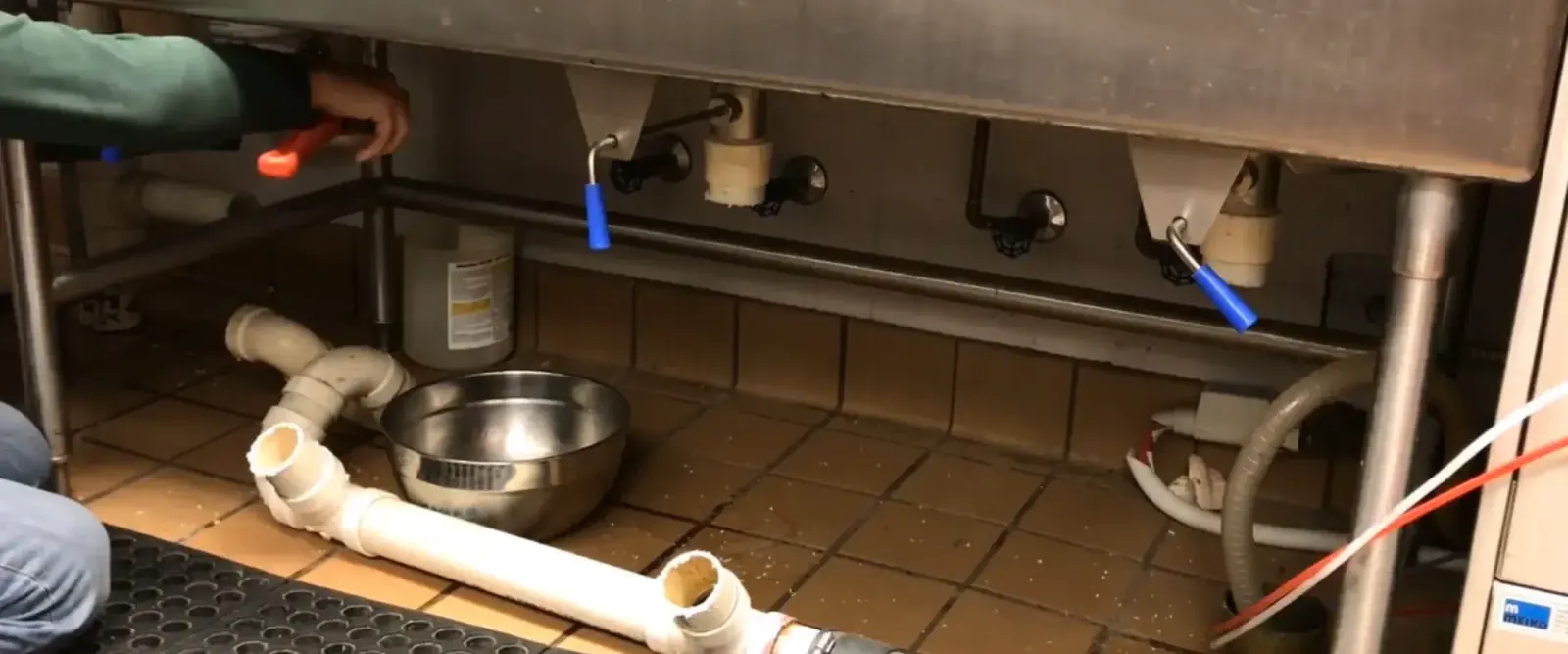
Commercial kitchens send fat, oil and food into the drain every day. Grease traps and interceptors catch some of it, but the lines still build up. Regular hydro jetting keeps lines moving and avoids a backup during service.
Floor drains in utility rooms, restrooms and kitchens also dry out and trap sewer gas or back up in a main blockage. A camera check shows why a floor drain keeps filling.
Restrooms, water heaters and supply lines
Restrooms take the most daily use, so flush valves, fill valves and faucets wear out fast. A running toilet in a business can waste water all night. Commercial water heaters and recirculation systems are larger than home units, and a failed one can leave a restaurant unable to wash dishes legally.
A note on leak detection in commercial buildings
Commercial leak detection is harder than residential, because pipes run through ceilings, walls and slabs that belong to different parties. We explain what we find and what it means for the lease or owner, and you decide what to approve. See leak detection for the methods.
Preventive service is cheaper than emergency service. A scheduled jetting pass, a floor drain check and an annual look at the water heater and backflow devices catch problems while the business is still open. Ask the dispatcher about a maintenance visit.
Work like this is judged against the Ohio Plumbing Code, the standard inspectors apply. Greene County Public Health handles plumbing permits and inspections in the county, so ask your plumber who pulls the permit and what the inspection covers before the work starts.
Commercial plumbing around Fairborn
West Main Street is Fairborn's downtown commercial street, and the area near Wright State University and Wright-Patterson Air Force Base supports restaurants, shops and offices. Many buildings along older commercial strips have plumbing that was added to over decades.
Commercial plumbing contractors in Ohio are licensed by the Ohio Construction Industry Licensing Board, and the board has an online lookup. Greene County Public Health handles plumbing permits and inspections for the county, so ask about permits before larger work.
What changes the price of commercial work
A sudden pipe burst or backup may be covered under a commercial property policy, but wear and maintenance usually are not. Ask your insurer and call for your real number.
Yes. The 24/7 line takes commercial calls, and same-day visits are offered when available. Tell the dispatcher the building type and whether you can reach the main shutoff.
Yes, including jetting and floor drain work. Grease interceptor cleaning rules vary, so ask the city or health district what your kitchen needs.
Yes. Planned work can be scheduled after closing, and emergencies are handled whenever they occur.
That depends on your lease. We explain what we find so you can take it to the owner.
Yes. Tell the dispatcher the size and fuel type. Larger units may need special vent or gas upgrades.