
Sewer backup: what to do first
Do these before the plumber arrives
No flushing, laundry, dishwasher or long showers. Every gallon adds to the backup.
Sewage carries bacteria. Keep children and pets out of the wet area and wear boots and gloves if you must enter.
Switch off breakers from a dry spot if water has reached outlets or appliances.
Take photos before cleanup for your insurance company.
What damages a sewer line
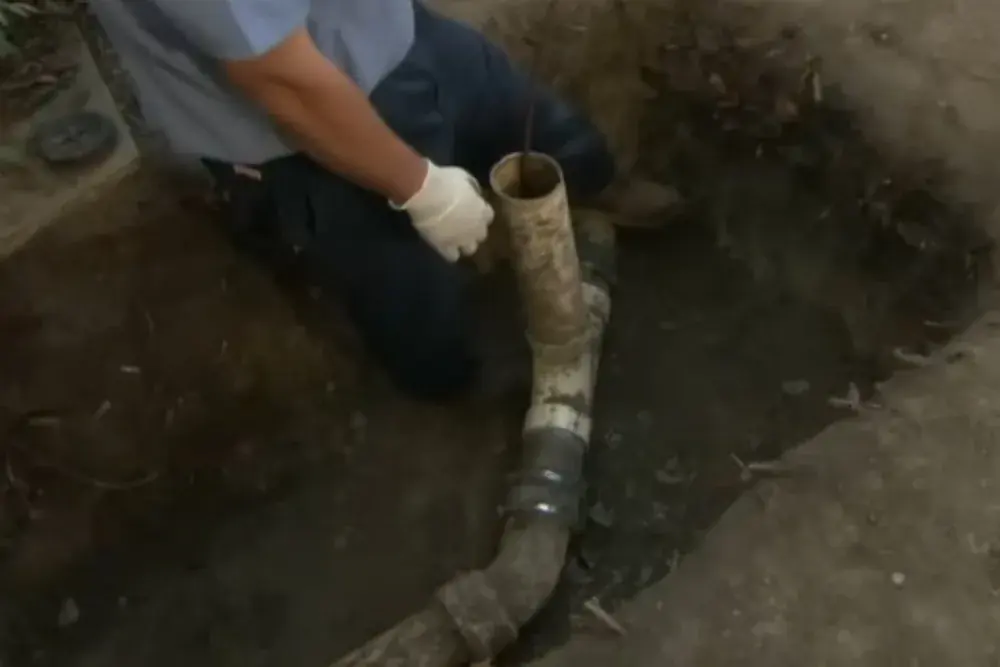
Sewer lines fail slowly, then all at once. Roots work into joints, clay pipe cracks, cast iron flakes from the inside, and soil movement leaves low spots called bellies where waste collects. Each one shows up as repeated clogs, slow drains throughout the house, or sewage smell outside.
A camera inspection pins down what you have. Jumping to a dig without one risks digging in the wrong place.
| Option | How it works | Good fit when |
|---|---|---|
| Spot repair | Dig to the damaged section and replace it | One short break or offset |
| Pipe lining (trenchless) | A resin liner is cured inside the old pipe | Cracks or root entry, pipe still holds its shape |
| Pipe bursting | A new pipe is pulled through as the old one is broken up | Whole run is failing and a dig is not wanted |
| Full replacement | Trench out the old line and lay new pipe | Collapsed pipe or major belly |
Trenchless lining, in plain words
A liner is a flexible tube coated in resin. It is pulled into the old pipe and inflated, then cured so it hardens into a new pipe inside the old one. It works on a pipe that is cracked, rooted or leaking at joints but still follows its original path.
It does not work on a collapsed pipe or one with a severe belly. The camera shows which you have, and the plumber tells you honestly if lining will not hold.
Sewer line cleaning versus repair
If the pipe is intact and only clogged, cleaning may be enough. See sewer line cleaning for that route. If cleaning does not hold or the camera shows damage, repair is the long fix. Hydro jetting often comes before lining to prepare the pipe.
Work like this is judged against the Ohio Plumbing Code, the standard inspectors apply. Greene County Public Health handles plumbing permits and inspections in the county, so ask your plumber who pulls the permit and what the inspection covers before the work starts.
Fairborn lines and who is responsible
A sewer lateral runs from your house to the city main. In most cities the owner is responsible for the lateral up to the main connection, but rules differ, so ask the City of Fairborn's Division of Water and Sewer Maintenance who is responsible for which section and whether a permit applies.
Fairborn's building boom from 1950 to 1970 means many laterals are decades old. Clay and cast iron from that era are the lines we most often find with root entry and cracked joints. Mature trees near the line are the first thing to mention to the dispatcher.
What changes the price of sewer line repair
Standard homeowner policies often exclude sewer line wear, though a sudden backup may be covered under an endorsement. Check your policy and call us for your real number.
Yes. The 24/7 line is open on weekends and holidays. A backup gets first-aid steps from dispatch, and a visit is booked same-day when available.
If only your house is backing up, the blockage is usually on your side. If neighbors are affected too, the city main may be involved, and you should call the City of Fairborn's sewer division as well.
It depends on the material. Clay and cast iron can serve for decades but fail with age. PVC lasts longest. A camera inspection shows the actual condition.
Not always. Lining and pipe bursting are done through small access holes. The plumber explains which method fits before work begins.
Permit rules vary by job, so ask Greene County Public Health or the city. Your plumber will usually know what applies.
They rarely break it but they enter at joints and cracks and then swell. Over time the pipe fills and fails.