
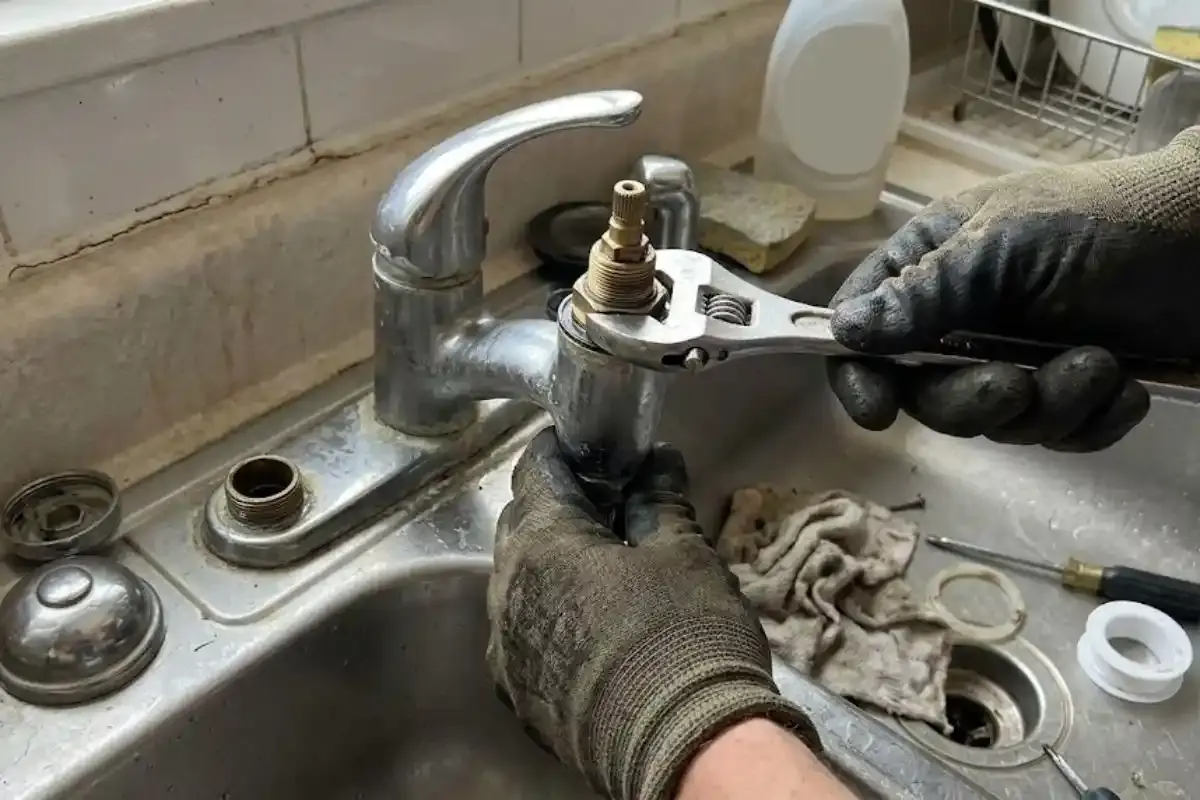
When a faucet problem is an emergency
A steady drip is a repair for later. A supply line that has burst under a sink, a shutoff valve that will not close, a shower valve that leaks behind the wall, or a handle that has snapped and left water running are emergencies.
Close the supply valve under the fixture first. If it will not close, shut the house main and call the 24/7 line. Water behind a shower wall is especially urgent because it damages framing unseen.
| Problem | Usual cause | Fix |
|---|---|---|
| Dripping spout | Worn cartridge, washer or seat | Replace the cartridge or washer |
| Leak under the sink | Supply line, drain trap or faucet base seal | Replace the supply line or tighten fittings |
| Shower valve will not shut off | Worn cartridge or stem | Replace the cartridge or valve |
| Low flow at one faucet | Clogged aerator or cartridge | Clean or replace |
| Stuck supply valve | Mineral buildup | Replace the shutoff valve |
| Tub spout leaks when the shower runs | Worn diverter | Replace the diverter or spout |
Kitchen, bathroom and tub fixtures
Kitchen faucets work hardest. Pull-down sprayers fail at the hose connection, and single-handle faucets wear in the cartridge. Bathroom sinks have the same parts in a smaller size. Tubs and showers add a diverter and a valve body behind the wall, so a repair there may need access from the other side.
If your faucet is more than fifteen years old or the finish has worn, replacement can cost about the same as repair and gives a new warranty.
Shutoff valves and supply lines
The small valves under sinks and behind toilets are the first line of defense. Old ones seize and leak when turned. A plumber can replace them so the next repair is fast and the house main does not need to be shut. Braided steel supply lines also fail, and replacing them is a small job that prevents a big one.
For a toilet's supply, see toilet repair.
A quick habit helps every fixture last. Close and open the shutoff valves under each sink once a year, so they do not seize. If one will not move, it is worth replacing before it fails during an emergency.
Safety first before you touch a faucet
- Close the shutoff valves under the sink, or the main valve if they are stuck
- Open the faucet to drain the line and release pressure before loosening parts
- Keep a towel and a bucket ready, and plug the drain so small parts do not fall in
- If a shutoff valve will not turn or drips, stop and call rather than forcing it
Work like this is judged against the Ohio Plumbing Code, the standard inspectors apply. Greene County Public Health handles plumbing permits and inspections in the county, so ask your plumber who pulls the permit and what the inspection covers before the work starts.
Fixtures and Fairborn's water
The City of Fairborn treats its well water mainly for iron and manganese. Minerals in groundwater can clog aerators, stain fixtures and seize valves over time. If you see crust on a faucet, the aerator likely needs cleaning.
The city does not give a hardness number in the report we reviewed, so test your tap with a home kit, and ask the Division of Water and Sewer Maintenance for its latest water quality report. If the test shows high hardness, a water softener helps fixtures last.
What changes the price of faucet repair
Insurance may cover water damage from a sudden burst, but not the fixture. Call for your real number.
Yes. The 24/7 line is open on weekends and holidays. The dispatcher tells you how to stop the water, then books a visit.
Under ten years old, repair is usually right. Over fifteen, replacement is often similar in cost and gives a new warranty.
Yes, because water inside a wall rots framing without showing. Shut off the shower and call.
Yes. New valves make later repairs much easier.
Yes. Bring your own or ask the plumber for suggestions. The quote includes new supply lines and removal of the old faucet.