When a burst pipe is an emergency
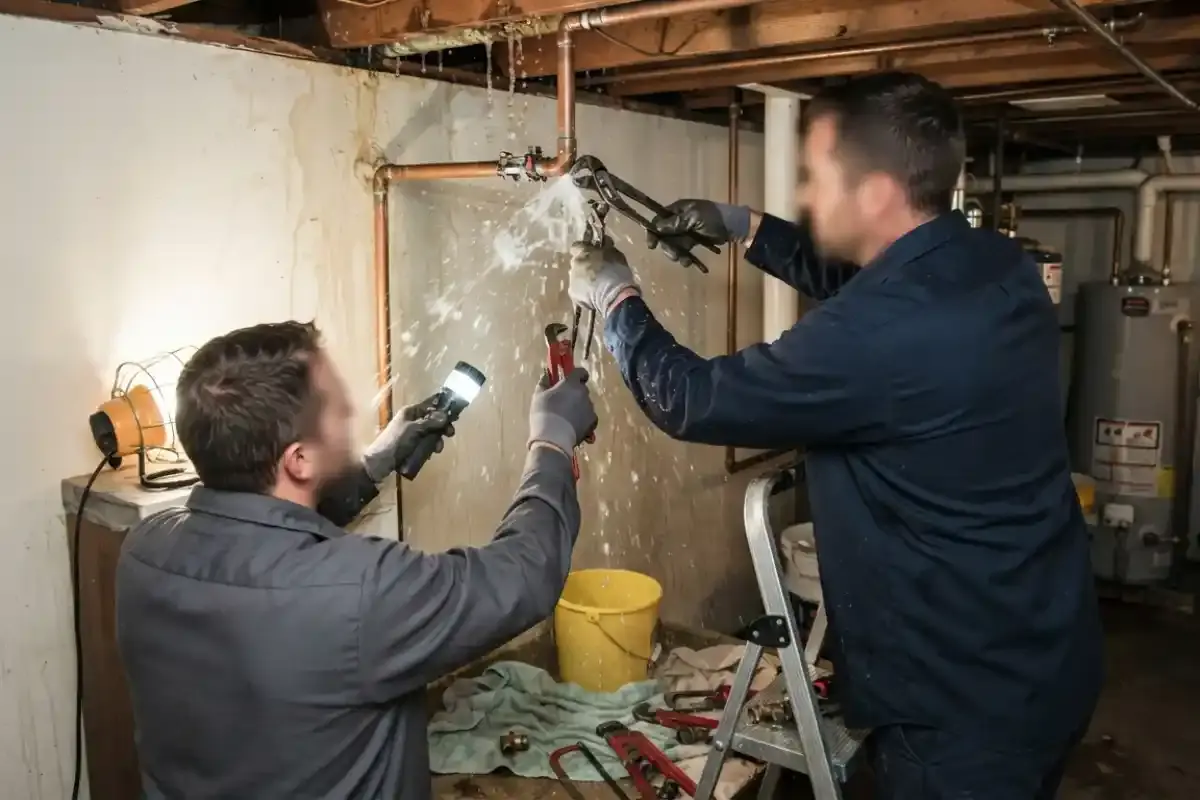
Water spraying from a pipe, a ceiling that bulges, or a basement with water running down the wall is an emergency. So is any pipe that has frozen and cracked, because it will leak as soon as it thaws.
The first job is to stop the water. Find the main shutoff, which is often where the line enters the basement near the meter, and turn it fully clockwise. Then call the 24/7 line for the repair.
While you wait for the plumber
Turn it clockwise until it stops. If it is stuck, call and tell the dispatcher.
Open the lowest faucet in the house and flush the toilets to relieve pressure.
Switch off breakers for wet areas from a dry spot. Never stand in water to reach the panel.
Lift valuables off the floor, then photograph the damage for your insurer.
Why pipes burst
Freezing is the best-known cause. Water expands as it turns to ice and splits the pipe, usually in an unheated crawlspace, an exterior wall or an uninsulated basement corner. Corrosion, high water pressure and age cause the rest.
A pinhole leak in older copper often starts as a green stain and a damp patch. It will burst in time, so call before it does.
| Material | Typical failure | Repair |
|---|---|---|
| Copper | Pinholes, freeze splits, corroded joints | Cut out and replace the section, or reroute |
| PEX | Freeze splits, fitting leaks | Replace the section with new fittings |
| Galvanized steel | Internal corrosion, low pressure, leaks at threads | Replace the section, often a repipe |
| Cast iron drain | Cracks, leaking joints | Section replacement or lining |
| CPVC | Brittle cracks, fitting failures | Replace the section and fittings |
Frozen pipes
If a pipe is frozen but not yet burst, keep the faucet open, warm the area with a hair dryer or a space heater placed safely away from water, and do not use a torch. Once the pipe thaws, check for leaks. If any water appears, shut the main and call.
Insulating pipes in unheated spaces and opening cabinet doors on cold nights are cheap protection. If the same pipe freezes each winter, ask about rerouting it.
Repair or repipe
One burst on an otherwise sound line is a spot repair. A second or third failure in a short time, especially in galvanized steel or older copper, means the whole line is wearing out. See repiping for that decision, and leak detection if you cannot see the source.
Work like this is judged against the Ohio Plumbing Code, the standard inspectors apply. Greene County Public Health handles plumbing permits and inspections in the county, so ask your plumber who pulls the permit and what the inspection covers before the work starts.
Fairborn winters and older pipes
Houses built during Fairborn's 1950 to 1970 growth years commonly have copper or galvanized supply lines that are now decades old. Cold snaps hit exterior walls and unheated crawlspaces first, so check those areas.
Greene County Public Health handles plumbing permits and inspections for the county. Repairs and leaks are treated differently from new installations, but permit rules vary, so ask before larger work.
What changes the price of a burst pipe repair
Insurance often covers sudden pipe bursts, including the water damage, but not slow leaks or wear. Take photos and call for your real number.
Yes. The 24/7 line is open on weekends and holidays, and same-day repair is offered when available. Close the main valve first.
Usually in the basement or utility room where the line enters the house, near the meter. Find it before you need it.
Many policies cover sudden bursts and resulting damage, but not wear or slow leaks. Read your policy and photograph everything.
Keep a faucet open, warm the pipe gently and watch for leaks as it thaws. Call if any water appears.
Repeated leaks, low pressure, rust-colored water or galvanized pipe all point that way. The plumber can check the line and give an honest recommendation.