
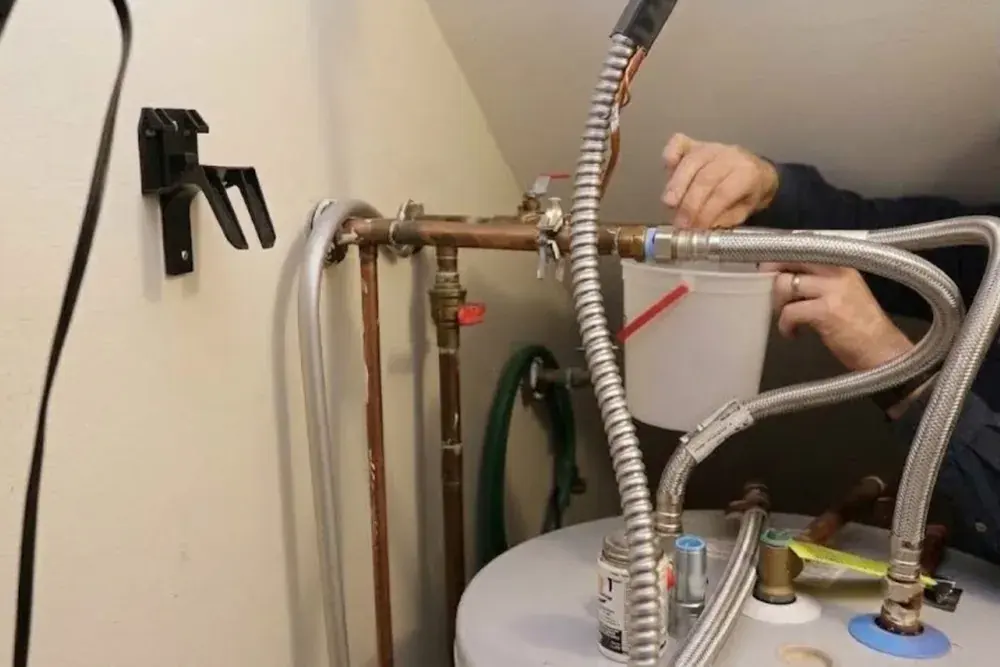
Why the water heater stopped heating
Most no-hot-water calls come down to a short list of failed parts. On an electric tank, it is usually a heating element or a thermostat. On a gas tank, it is a thermocouple, a pilot assembly or a gas control valve. Each can be replaced on the spot when the tank itself is sound.
A tank that is leaking from the shell is a different story. Once the steel liner has rusted through, no part will fix it, and the honest answer is a new unit. We tell you which situation you are in before any work starts.
| What you see | Likely cause | Typical fix |
|---|---|---|
| No hot water, electric tank | Failed element, thermostat or tripped limit switch | Part replacement and a reset |
| No hot water, gas tank | Pilot out, bad thermocouple or gas valve | Relight and replace the failed part |
| Water pooling at the base | Leaking tank, or a loose fitting or valve on top | Check the source first, tank leaks need replacement |
| Popping or rumbling sounds | Mineral scale on the bottom of the tank | Flush the tank, replace the unit if heavily scaled |
| Relief valve dripping | High pressure or temperature, or a worn valve | Test the valve and check the expansion tank |
A leaking tank: what to do in the first ten minutes
Before we arrive
Turn the cold water valve above the heater clockwise until it stops.
Switch the gas control to off, or flip the heater's breaker if the floor around it is dry.
Attach a hose to the drain valve at the bottom only if you can do it safely, and run it to a floor drain.
Move stored items away and note the heater's brand and age from the label for the dispatcher.
If the tank is more than ten years old and leaking, repair rarely makes sense. Read about water heater replacement and the option of a tankless water heater before you decide.
Gas, electric and heat pump units
Gas heaters need a clear flue and combustion air, so a repair visit includes a look at the vent for rust, loose joints or backdrafting. Electric heaters are simpler to service but deal with higher scale build-up on the elements. Heat pump water heaters add a compressor and a condensate line, and they need space and airflow around them to work.
Relief valves, anode rods and expansion tanks
The temperature and pressure relief valve is the safety device on the tank. If it drips steadily, the cause is either pressure in the house plumbing or a failing valve, and both need checking. A pressure fix may be an expansion tank on the cold line.
The anode rod is a sacrificial rod that corrodes so the tank does not. Replacing a spent rod early can add years to a tank, but only if the tank is still sound inside.
Work like this is judged against the Ohio Plumbing Code, the standard inspectors apply. Greene County Public Health handles plumbing permits and inspections in the county, so ask your plumber who pulls the permit and what the inspection covers before the work starts.
Fairborn water and your water heater
Fairborn's drinking water comes from wells in the Mad River Well Field, and the city's treatment plant is described as mainly removing iron and manganese before the water is chlorinated and fluoridated. The city does not publish a hardness number in the report we reviewed, so we do not guess one. Scale on elements and sediment in the tank bottom are common anywhere with mineral-bearing groundwater.
A simple home test strip will tell you your hardness, and the city's water division can send its latest report. If the number is high, flushing the tank each year and a water softener both protect the heater.
What changes the price of a water heater repair
Insurance may cover water damage from a sudden tank failure, but rarely the heater itself. Call the 24/7 line for your real number.
Yes. The dispatch line is open 24/7. A leaking tank gets same-day attention when available, and the dispatcher will tell you how to shut off water and fuel while the visit is arranged.
Age and the failed part decide it. A tank under ten years old with a bad element or thermostat is usually worth repairing. A tank that leaks from the shell is always a replacement.
It is usually scale on the tank bottom boiling under the burner or element. It is not an emergency, but a flush should be scheduled because heavy scale shortens the tank's life.
Yes. Older homes often have heaters in tight basement or closet spaces and plumbing that was reworked over time. The plumber will check clearances and vent routing when quoting.
Often a worn thermocouple or a dirty pilot assembly. If the flame is yellow or you smell gas, leave the building and call the gas utility before you call us.
Yes. Flush, descale and repair for tankless units are covered on the tankless water heater page.