
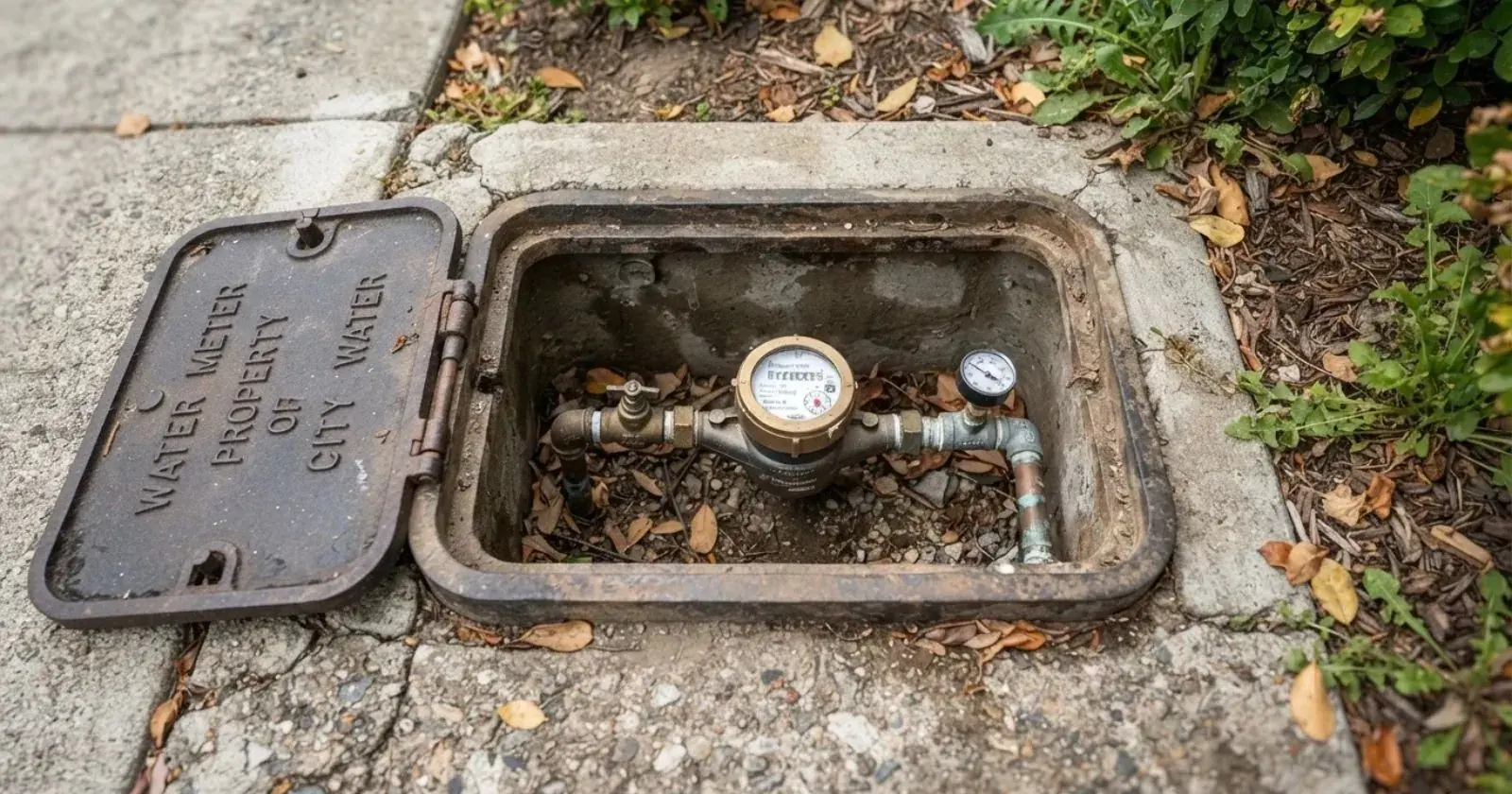
The fastest check is your water meter. Turn off every tap and appliance, then watch the small leak indicator or the low-flow dial for a few minutes. If it moves, water is going somewhere. Then check the toilets, since a leaking flapper is the most common hidden leak and the cheapest to fix.
If the meter keeps moving after the toilets check out, the leak is on a supply line, in the yard or inside a wall, and it is time to call.
Step by step: the meter test
Find out whether water is escaping
- Shut off all water use
Check that no dishwasher, ice maker or irrigation system is running.
- Read the meter
Note the number and the position of the leak indicator.
- Wait fifteen minutes
Do not use any water.
- Read it again
If the number moved, or the indicator is spinning, water is leaking.
Quick checks around the house
| Clue | Where to check | What you may find |
|---|---|---|
| Meter moves with taps off | Toilets, then supply lines | Flapper leak, line leak |
| Musty smell in a cabinet | Under sinks, behind the dishwasher | Slow supply or drain leak |
| Paint bubbling on a wall | Behind the wall near a bathroom | Supply or drain leak |
| Warm spot on the floor | Under the slab | Hot water line leak |
| Stain growing on a ceiling | Above, in the attic or upstairs bath | Drain, supply or roof leak |
| Lawn that is soggy and green | Between the meter and the house | Service line leak |
The toilet dye test
Drop a few drops of food coloring in the tank, wait twenty minutes without flushing, and look in the bowl. If color appears, the flapper is leaking. Replacing the flapper takes minutes and often ends the problem.
Do the same test on each toilet. Several small leaks add up to a surprising amount of water.
What a plumber adds
Professional detection uses acoustic listening devices, thermal cameras, moisture meters and pressure tests to find a leak without cutting holes first. It can tell you which pipe is leaking and about where. That turns a wall-demolition guess into a small, planned opening. See leak detection for the methods.
Call right away if you notice
- Water bubbling up through a floor or a concrete slab
- A wet or sagging ceiling
- The meter spinning fast with everything off
- A hissing sound in a wall
- Water near an electrical panel or outlet
Leaks outside the house
A lawn that is greener or wetter in one strip, a sunken patch of soil, or water pooling near the meter can mean a leak in the service line. Listen at the meter and at the outdoor spigot for a hiss when no one is using water. A hissing sound tells you the line is under pressure and leaking.
Irrigation systems are another source. Check each zone, since a cracked line or a stuck valve can run for days without anyone noticing.
A moisture meter and your own eyes
A moisture meter reads how wet a wall or floor is without damaging it. Plumbers use pin and pinless models, and some hardware stores rent them. Readings are higher near the leak and drop away from it, which helps map the wet area.
Your own checks matter too. Look at the underside of sinks, the base of the toilet, the back of the water heater and the ceiling below any bathroom. Discoloration, soft drywall and peeling paint are all clues.
Thermal cameras and acoustic equipment
A thermal camera shows temperature differences, which makes a hot water leak under a slab or a damp patch behind a wall visible. Acoustic equipment listens through the floor or the soil for the sound of escaping water. Together they narrow a hidden leak to a small area before anyone opens a wall.
How much water a small leak wastes
A toilet flapper that leaks silently can waste many gallons a day. A dripping faucet adds up over a month. A slow leak in a supply line behind a wall wastes water, but the larger cost is the damage to framing, insulation and drywall, which shows up as mold, soft wood or peeling paint.
That is why a small leak is not worth ignoring. The fix is usually cheaper than the damage it causes, and finding it early is the whole point of the meter test.
What Fairborn homeowners should know
The City of Fairborn's 2025 water quality report lists fluoride at 0.99 parts per million and total chlorine at 1.23 parts per million, and lead sampling from 2023 found 2.7 parts per billion. Those figures are from the city's own report. If you see rusty or discolored water along with a leak, the city's Division of Water and Sewer Maintenance can tell you whether work is going on nearby.
Greene County's plumbing regulations exempt leaks and repairs in existing plumbing from the up-front permit requirement, so a leak repair can start right away. If the fix involves new piping or a reroute, ask the health district whether a permit applies.
For a buried line, see water line repair. Neighbors in Xenia and Riverside can call the same line.
Compare it to previous months at the same time of year. If it jumped with no change in habits, run the meter test.
Yes. A flapper that does not seal lets water slip into the bowl silently, which is why the dye test is useful.
Often a warm spot on the floor, the sound of running water or a rising bill. A plumber confirms with equipment.
Many utilities base the sewer charge on water used, so a leak can raise both. Ask the city's water division how your bill is calculated.
As soon as possible. Small leaks rot framing and grow mold long before they flood.