
Signs your house may need repiping
These point toward a repipe, not a patch
- Repeated leaks in different parts of the house
- Rust-colored or metallic-tasting water when you first run a tap
- Low pressure that does not improve at any fixture
- Galvanized steel, polybutylene or early CPVC pipe in the walls
- Green stains or pinholes along copper lines
A single failure on sound pipe is a repair. A pattern of failures means the pipe is wearing out everywhere at once, and each patch costs time and damage.
Pipe materials and what each means for you
| Material | Era | What to know |
|---|---|---|
| Galvanized steel | Common before the 1960s | Corrodes inside and loses flow, leaks at threads |
| Polybutylene | Late 1970s to mid-1990s | Prone to failure at fittings, often replaced |
| Copper | 1950s onward | Long life, but pinholes can occur |
| PEX | 1990s onward | Flexible, freeze tolerant, fast to install |
| CPVC | 1980s onward | Can become brittle with age and heat |
What a whole-house repipe involves
How the project runs
- Plan the routes
The plumber walks the house and decides where new lines go and where walls need access.
- Protect the home
Floors and furniture are covered and the water is shut off for the work period.
- Install new lines
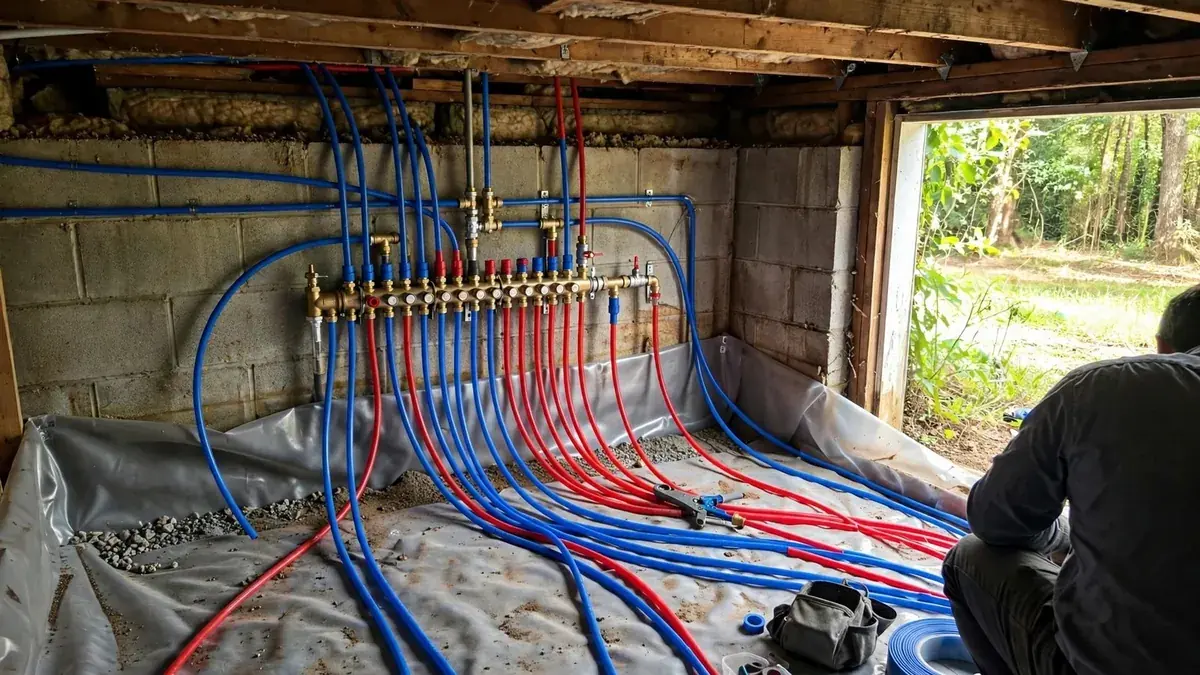
New PEX or copper is run from the main to each fixture, often using a manifold.
- Test and flush
The system is pressure tested, flushed and checked for leaks.
- Patch access holes
Drywall openings are patched so a painter can finish.
Partial repiping is an option when one area is failing, such as a bathroom or a kitchen run. Pair it with leak detection to find where the failure is concentrated.
PEX or copper: how to choose
PEX is flexible, goes in quickly with fewer joints and tolerates a freeze better than rigid pipe. Copper has a long track record, handles heat well and is preferred by some owners and some inspectors. Both meet the plumbing code in most places.
The practical choice usually comes down to cost, access and personal preference. A plumber can price both for your house.
Getting ready for a repipe
Move furniture and belongings away from walls where lines run.
The water will be off for part of each work day, so store drinking water.
Cover floors and remove wall hangings.
Ask who will repair drywall and paint, since that is separate work.
Safety during a repipe
- Keep children and pets out of work areas, where cut pipe and tools are on the floor
- Know where the main shutoff is, and confirm it holds before work begins
- Do not use hot water or the water heater until the plumber says the lines are filled and checked
- Keep power away from wet drywall and open walls until everything is dry
Work like this is judged against the Ohio Plumbing Code, the standard inspectors apply. Greene County Public Health handles plumbing permits and inspections in the county, so ask your plumber who pulls the permit and what the inspection covers before the work starts.
Repiping an older Fairborn house
Fairborn grew about sixfold between 1950 and 1970, so many houses still have their original supply lines. Galvanized steel from that period can be badly narrowed by corrosion. If your home is in the Historic Osborn District, ask the plumber to look at what was changed when the house was moved and updated.
Greene County Public Health handles plumbing permits and inspections for the county, and permit rules vary, so ask whether a repipe needs one.
What changes the price of repiping
Insurance usually does not pay for repiping by itself, but it may cover damage from a sudden failure. Call for your real number.
It depends on the house, but many homes take a few days. The plumber gives a schedule at the quote.
Often yes, but water is off for part of each day. The plumber explains the plan.
PEX is widely used, resists freezing better and installs faster. Copper has a long record and some owners prefer it. Both are accepted by plumbing codes.
Permit rules vary, so ask Greene County Public Health or the city. Your plumber will normally know.
If the cause is corroded pipe, yes. If the cause is the street supply or a regulator, no. The plumber measures pressure first.