
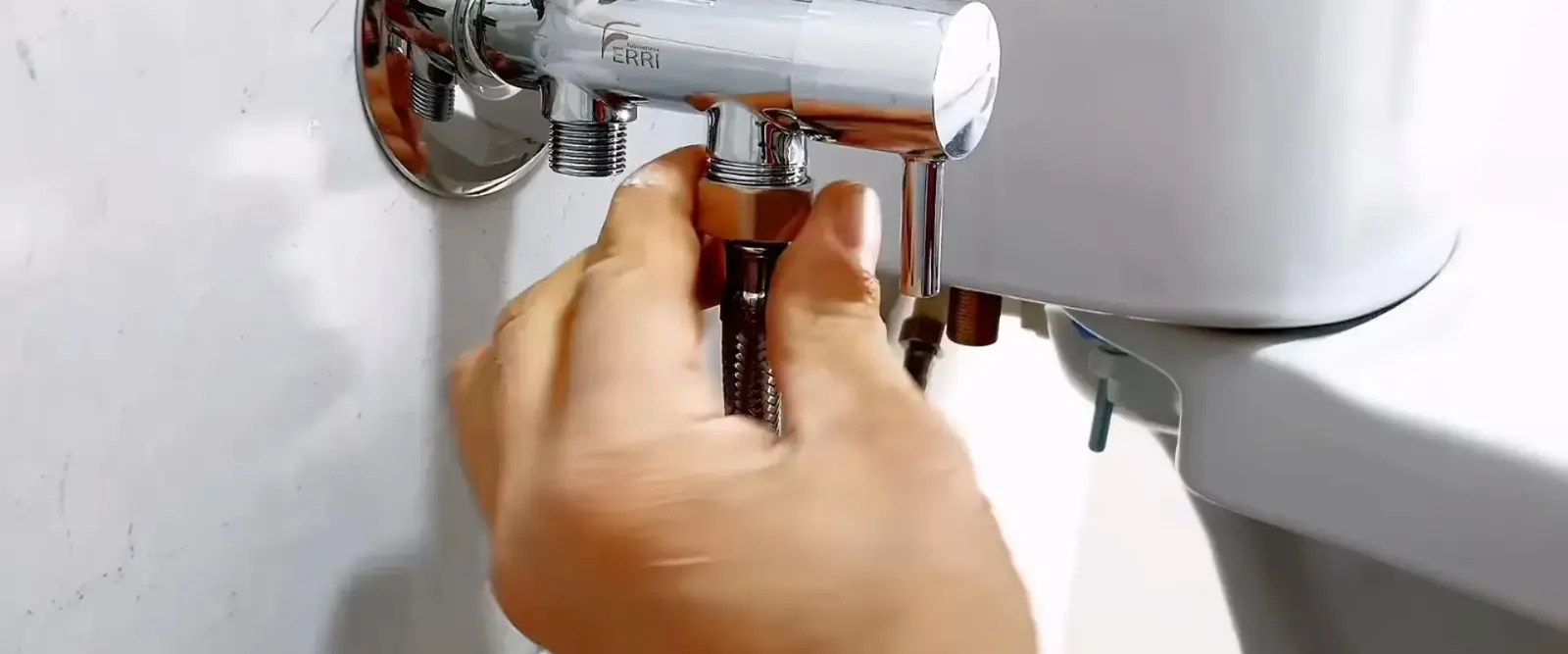
When water appears around the bottom of a toilet, there are four likely causes: a failed wax ring, loose closet bolts, a leaking supply line or tank connection, and condensation from a cold tank. A wax ring leak only happens when you flush. Condensation and supply leaks happen without a flush.
Dry the floor and the toilet completely, put a few sheets of toilet paper around the base and flush. If the paper is wet only after a flush, the ring or the flange has failed.
Four ways to find the source
| Test | Wet when? | Likely source |
|---|---|---|
| Dry the area, flush, check | After each flush | Wax ring or flange |
| Dry the area, wait an hour | No flush needed | Supply line or tank bolts |
| Wipe the tank and bowl | In humid weather only | Condensation on a cold tank |
| Rock the toilet gently | Moves or creaks | Loose bolts or a bad flange |
How the wax ring fails
A wax ring or a rubber seal sits between the toilet and the floor flange. It keeps water and sewer gas inside the drain. It fails when the toilet rocks, when the flange sits too low or is cracked, or when the toilet has been removed and reset with the old ring.
A slow leak at the base soaks the subfloor, which can stain a ceiling below and rot the floor. A toilet that rocks should be reset soon.
How the repair is done
Resetting a toilet with a new ring
- Shut off and drain
Close the supply valve, flush, and sponge out the remaining water.
- Disconnect and lift
Remove the supply line and closet bolts, then lift the toilet straight up.
- Inspect the flange
Look for cracks, rust or a flange that sits too low. Repair rings and extenders fix many flanges.
- Set a new seal
A new wax ring or rubber seal goes on the flange, and the toilet is set evenly.
- Tighten evenly and test
Alternate between the two bolts, reconnect the supply, and flush several times to check for leaks.
A bad flange is the bigger problem
If the flange is rusted cast iron, broken or below the finished floor, a new ring will not hold. The fix is a flange repair ring or a replacement flange. If the subfloor is soft, it needs to be repaired too. See toilet repair for the process, and leak detection if you suspect water is traveling beyond the base.
What the subfloor tells you
When a toilet is lifted, look at the floor around the flange. A subfloor that is dark, soft or crumbles under a screwdriver has been wet for a long time. Soft wood around the flange cannot hold the toilet steady, and a new ring will fail again unless the floor is repaired.
A small damaged area can be cut out and patched. A large one needs a carpenter.
Closet bolts, shims and rocking
A toilet that rocks even a little puts stress on the seal. If the floor is slightly uneven, plastic shims under the base level it before the bolts are tightened. Over-tightening one bolt can crack the porcelain, so tighten each in small turns, alternating sides.
Replace the flange when you see this
- The flange is cracked, broken or missing a bolt slot
- The flange sits below the finished floor
- Rust has eaten into a cast iron flange
- The flange moves when you press on it
- The pipe beneath is damaged or the connection is loose
Preventing the next leak
Check the closet bolts and the toilet for movement twice a year. Fix a rocking toilet promptly. Wipe up sweating on the tank in humid months, and replace worn supply lines before they split. A few minutes of attention keeps a small leak from becoming a rotten floor.
What a good repair includes
A proper reset includes a new seal, new closet bolts if the old ones are corroded, a check of the flange and the floor, and a test of the supply line and the shutoff valve. A plumber also checks the caulk joint at the floor, and some leave a small gap at the back to let a future leak show.
If you only replace the seal and the toilet starts rocking again within a year, the flange or the floor was the cause. Ask for them to be checked while the toilet is up.
Safety before you lift a toilet
- Close the supply valve and flush to empty the tank and bowl
- Wear gloves and wipe up water to prevent slips
- Lift with a helper, as porcelain is heavy and sharp when broken
- Do not use the toilet again until the base is sealed and tested
Older Fairborn floors and flanges
Fairborn was formed from Fairfield and Osborn, and about 200 houses in the Historic Osborn District were moved by mules and tractors in the early 1920s. A house that has been moved may have its drain connections redone on the new lot, so the flange and the floor around a toilet deserve a careful look when it is reset.
Greene County's plumbing regulations exempt leaks and repairs in existing plumbing from the up-front permit, so a wax ring reset does not need one. Replacing or moving a toilet to a new location is different, so ask Greene County Public Health.
We cover Riverside and Kettering toilets on the same 24/7 line.
For a short time, yes, but water is soaking the floor and sewer gas may escape. Fix it soon.
Often decades, if the toilet never rocks. Any movement can break the seal.
Both work. Rubber or foam seals tolerate reuse and small gaps better, wax conforms well to flanges.
Yes. Cast iron flanges can rust and break with age. A plumber checks and repairs it during a reset.
If the toilet is sound, replace the seal. If the bowl is cracked or flushes poorly, replace the toilet.