
Pour a half cup of baking soda down a slow drain, follow it with a half cup of white vinegar, cover the drain and wait ten minutes, then flush with hot tap water. The fizz loosens light soap film and grease and freshens the trap. It helps with odors and small buildups, but it cannot dissolve hair, a hard blockage or a root.
If the drain is still slow after two tries, stop and call or switch to a plunger or an auger. More baking soda will not change the result.
The method, step by step
Baking soda and vinegar for a slow sink
- Clear the standing water
Bail out any water in the sink so the baking soda reaches the pipe.
- Add baking soda
Pour about half a cup into the drain.
- Add vinegar
Pour in about half a cup of white vinegar and close the drain with a stopper or a wet rag.
- Wait and flush
Leave it for ten to fifteen minutes, then run hot tap water for a minute.
- Test
Run a sink full of water and watch how fast it drains.
What this method does and does not do
| Problem | Result with baking soda and vinegar |
|---|---|
| Bad smell from a kitchen drain | Often helps |
| Slow drain from soap film | Often helps a little |
| Hair clog in a tub | Does not help, remove the hair |
| Grease plug in a kitchen line | May loosen a thin layer, not a full plug |
| Main line backup | No effect |
| Tree roots | No effect |
Safe habits that keep drains clear
Simple prevention for any Fairborn home
- Scrape plates into the trash, not the sink
- Pour cooled grease into a can, never down the drain
- Use a drain screen in every tub and shower
- Run hot water for a minute after washing dishes
- Never flush wipes, even those labeled flushable
When baking soda hides a bigger problem
A drain that smells even after cleaning may have a dry trap, a cracked vent or a partial blockage further along. A floor drain that bubbles when the washer runs is telling you that the main line is blocked, and no household product will fix that. See sewer line cleaning for that situation.
The next steps when it does not work
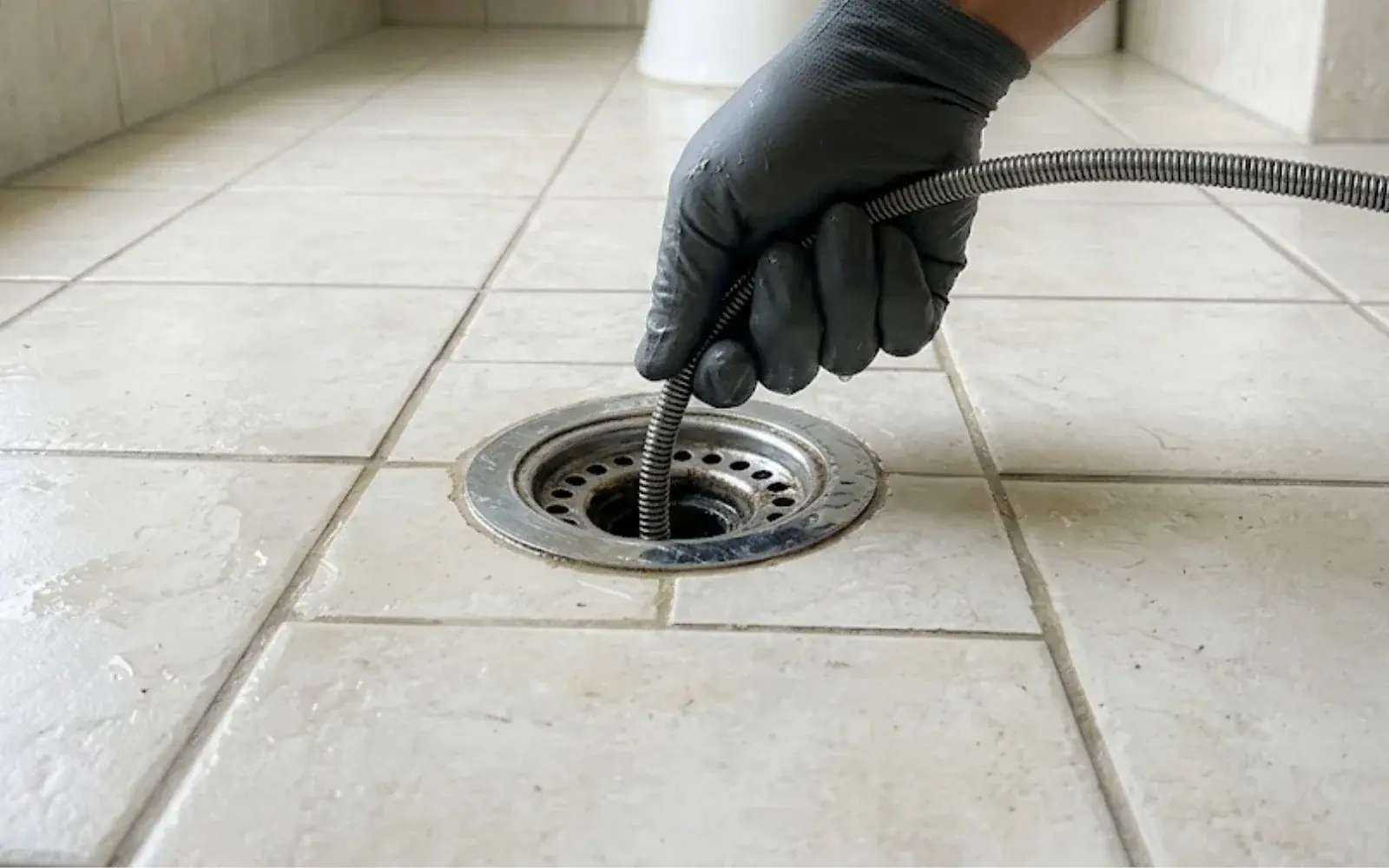
A cup plunger on a sink or tub, with the overflow blocked by a wet rag, can push a soft clog loose. For a clog just below the drain, a hand auger or drain snake reaches what a plunger cannot. Neither is hard, but both need patience.
If you feel the snake stop firmly and it will not pass, you may have reached a bend, a connection or a root. Pushing harder can damage the pipe.
Using a drain snake safely
Snaking a sink drain
- Remove the stopper or strainer
Clear the opening so the snake can go in.
- Feed the cable slowly
Turn the handle clockwise as you push, and stop when you meet resistance.
- Work the clog
Crank back and forth, then pull the cable out slowly and clean it.
- Flush with hot water
Run water for a minute to carry away what is left.
Why the smell comes back
A smell that returns after cleaning usually comes from the trap, the overflow channel in the sink or an unused drain with a dry trap. Pouring water into an unused drain refills the trap and blocks sewer gas. A persistent smell that does not respond may point to a vent problem, which a plumber should check.
A safer way to use hot water
Many guides tell you to pour boiling water down the drain. That works on grease in a metal pipe, but it can soften or warp PVC joints and crack a porcelain sink. Use water from the hot tap instead, which is hot enough to move melted grease along without risking the pipe.
Follow it with cold water for a few seconds so any grease that melted does not harden again further down the line, where you cannot reach it.
Think of the baking soda method as housekeeping. It keeps a healthy drain fresh, and it belongs alongside a strainer and sensible kitchen habits, not in place of a plunger or a plumber.
Why older Fairborn drains clog easily
Fairborn's population grew about sixfold between 1950 and 1970 as Wright-Patterson Air Force Base expanded, and the 2020 census counted 16,707 housing units in the city. Many of the older homes have cast iron drains whose rough interior walls hold grease and paper. A fizzing treatment cannot scour that scale off the pipe wall.
For a stubborn kitchen line, a cable or a hydro jetting pass cleans the whole wall. If you are in an older house in the Historic Osborn District, tell the plumber, since some homes there were moved and their drains reconnected in the early 1920s.
Homes in Riverside and Huber Heights have many mid-century drain lines too, so the same advice applies.
Yes, in the small amounts used here. Do not use it right after a chemical opener, since the mix can react.
Monthly as maintenance is fine. If you need it weekly, something in the drain needs a proper cleaning.
It rarely does. Use a flange plunger or a toilet auger.
A dry trap is the usual cause. Pour a quart of water down it, then a little cooking oil to slow evaporation. If it still smells, call.
A small amount can freshen it. Run cold water afterwards and do not use boiling water.