
Why basements leak
Water finds a basement through the floor-wall joint, through cracks, through porous block walls and through window wells. Poor grading, clogged gutters and downspouts that dump next to the foundation make it worse.
Before spending on a system, fix what is free. Extend downspouts, clean gutters and slope soil away from the house. Then see what is left.
| Source | How it shows up | Fix |
|---|---|---|
| Floor-wall joint | Water seeps along the base of the wall | Interior drain tile and a sump pit |
| Cracks in the wall or floor | Steady drip or damp streaks | Crack injection or sealing |
| Porous block | General dampness, white mineral crust | Interior drainage and a wall coating |
| Window wells | Water drips below the window | Better drainage and covers |
| Surface water | Pooling near the foundation after rain | Regrade, extend downspouts |
Interior drain tile and sump systems
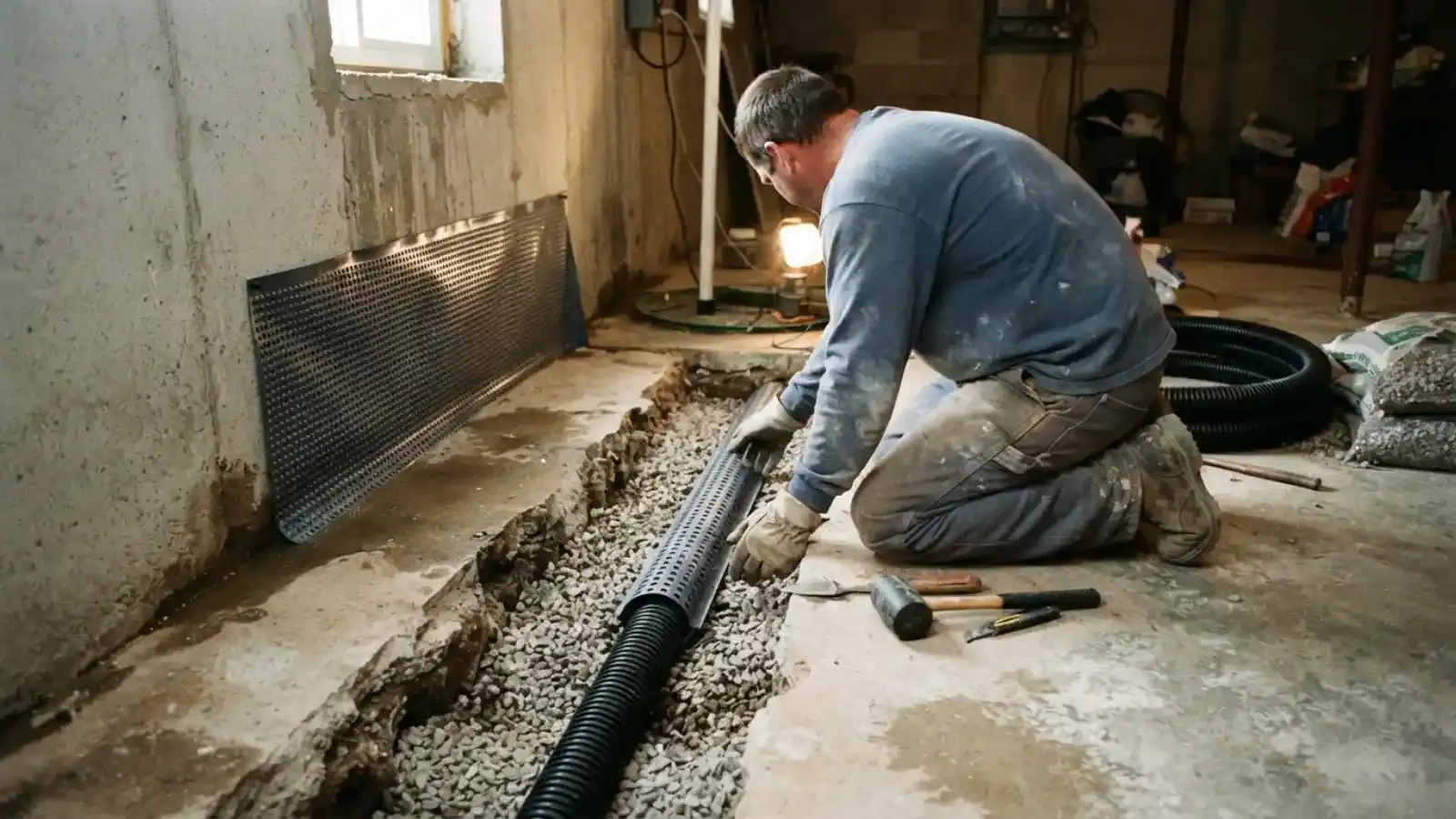
An interior system cuts a channel along the inside of the footing, lays perforated pipe, covers it with gravel and sends water to a sump pit. The pump moves it outside. It does not stop water entering the soil, but it controls it before it reaches the living space.
It is the most common fix for a leaking basement because it works from the inside, with no need to dig around the house.
DIY basement waterproofing: what works and what does not
Paint-on sealers can help with light dampness on a dry wall but they fail under water pressure. Hydraulic cement fills small cracks. A dehumidifier controls humidity but does not stop water. If you see water pushing through, you need a drainage system.
What an interior drain system install looks like
From inspection to a dry floor
- Inspect and plan
The plumber maps where water enters and chooses where the drain runs and where the sump pit sits.
- Open the floor
A strip of concrete along the wall is cut and removed, and the footing is exposed.
- Lay the drain
Perforated pipe goes into washed gravel, sloped toward the sump pit.
- Install the pit and pump
A sealed basin and a pump with a check valve and discharge line are added.
- Patch the floor
The channel is filled with new concrete and left to cure.
Plan on some dust and noise for a day or two, and clear the walls and floor of belongings. A system installed this way works with the sump pump to move water out, and it can be added to later if the problem grows.
Gutters and grading come first
Before any floor is cut, fix what is outside. Gutters that spill next to the wall, downspouts that end at the foundation and soil that slopes toward the house all send water to the basement. Fixing them costs little and can end a seepage problem outright, or at least reduce what the drain system has to handle.
Safety first in a wet basement
- Turn off power to the basement circuits from a dry spot before you go down
- Never walk into standing water if outlets, a panel or appliances are in it
- Do not mix cleaners, and ventilate the room if you smell fuel or sewage
- Wear boots and gloves, and keep children and pets out of the area
Work like this is judged against the Ohio Plumbing Code, the standard inspectors apply. Greene County Public Health handles plumbing permits and inspections in the county, so ask your plumber who pulls the permit and what the inspection covers before the work starts.
Basements in the Fairborn area
Fairborn sits along the Mad River in Greene County, and many houses built in the 1950 to 1970 growth years have basements with block walls. Block absorbs and passes water more than poured concrete. If your block basement has white crust or damp streaks, it is a sign of moisture moving through.
Ask the City of Fairborn or Greene County Public Health where sump water may be discharged, because rules for storm systems vary.
What changes the price of waterproofing
Insurance seldom covers seepage and gradual leaks. Ask your insurer and call for your real number.
Yes. Interior drain tile and a sump are the common approach and avoid excavating around the house.
Usually yes. The drain tile needs somewhere to send the water.
It removes the source. A dehumidifier and cleaning help the air afterwards.
Try downspout and grading fixes first. If water still appears after heavy rain, an interior system is the next step.
No. We deal with the water source. For mold, ask a qualified mold remediation company.