
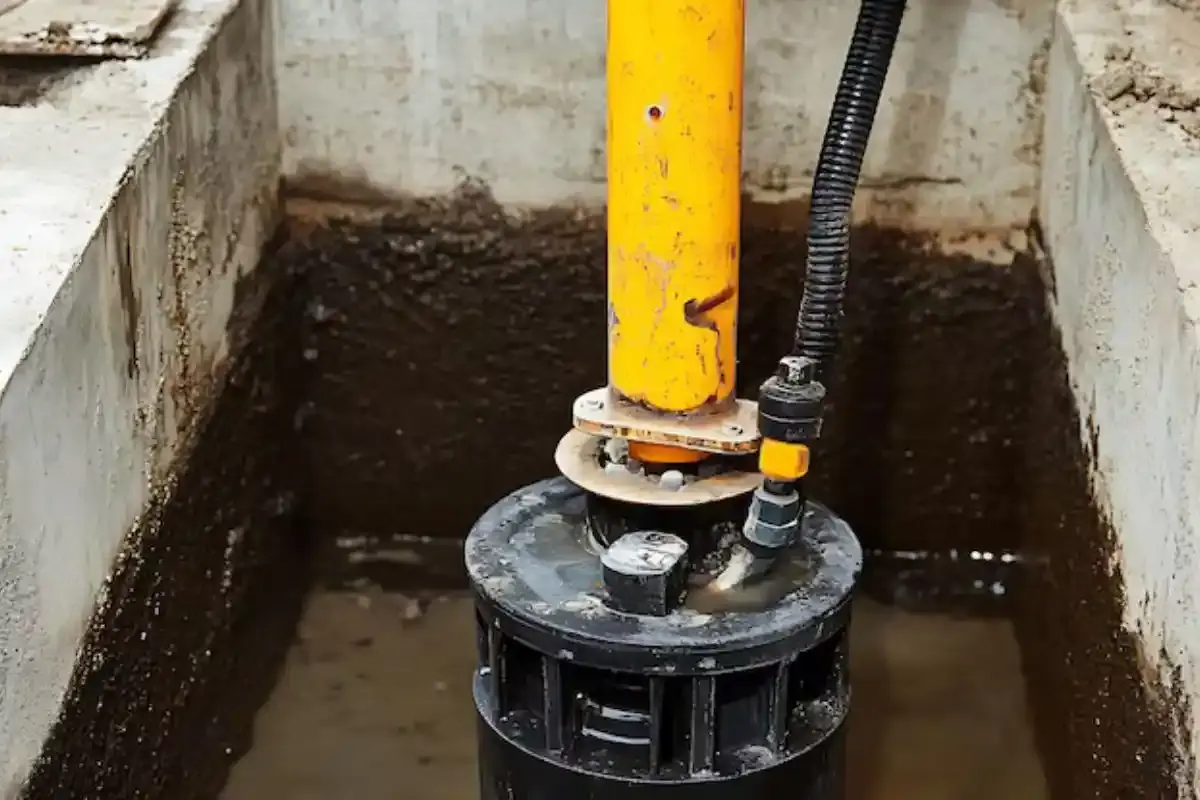
Sump pump failure: act first, diagnose later
A sump pump sits in a pit and pushes water out of the basement when the level rises. When it stops, the water has nowhere to go but the floor. Most failures happen in heavy rain, which is when the pump works hardest.
Check the plug, the breaker and the float. If water is already coming in, call the 24/7 line and move belongings up.
| Problem | Cause | Fix |
|---|---|---|
| Pump does not run | No power, stuck float or dead motor | Restore power, free the float, replace the pump |
| Pump runs constantly | Stuck float, failed check valve or high groundwater | Adjust or replace the float and valve |
| Pump hums but no water moves | Jammed impeller or clogged discharge | Clean the impeller and line |
| Water backs into the pit after pumping | Failed check valve | Replace the valve |
| Loud or rattling noise | Worn bearings or debris | Replace the pump |
Battery backup and water-powered backups
A pump needs power, and storms often cut it. A battery backup pump keeps working for hours, and a water-powered backup runs from the city supply when the power is out. Which one fits depends on pit size, discharge height and whether the house has the right pressure.
A high-water alarm is a cheap addition that warns you before the floor gets wet.
Installing a new sump pump
What a new installation includes
- Check the pit
The pit should be sealed, deep enough and free of debris.
- Set the pump
A pump with a vertical or tethered float sits on a stable base.
- Install the check valve and discharge
The pipe runs out and away from the foundation.
- Test
The plumber pours water in to confirm it switches on, pumps out and does not back up.
A pump deals with the water that arrives. Where it keeps arriving, basement waterproofing addresses the source.
Signs a sump pump is on its way out
Replace it before it fails in a storm
- The pump is more than seven to ten years old
- It runs loud, rattles or vibrates more than before
- The float sticks, even after cleaning
- Rust or iron staining coats the pump housing
- It cycles constantly even when the weather is dry
Safety around a sump pit
- Unplug the pump before touching it, and never reach into a pit with the power on
- Do not stand in water to test or unplug a pump
- Use a grounded outlet, ideally one with ground-fault protection
- Keep the pit lid in place so children and pets cannot fall in
Work like this is judged against the Ohio Plumbing Code, the standard inspectors apply. Greene County Public Health handles plumbing permits and inspections in the county, so ask your plumber who pulls the permit and what the inspection covers before the work starts.
Where the water comes from around Fairborn
The Mad River runs through the Fairborn area, and the city's drinking water wells sit in a buried valley aquifer next to the river. Areas near a river and an aquifer can have groundwater that rises in wet seasons. We do not claim any neighborhood floods, but a basement here that stays damp after heavy rain is worth a sump pit.
Where the pump discharges matters. Ask the City of Fairborn or Greene County Public Health whether sump discharge may go to the storm system or must stay on your property, because rules vary.
What changes the price of sump pump work
Many standard home policies exclude groundwater and sump failure unless you add an endorsement. Ask your insurer and call for your real number.
Yes. The 24/7 line is open on weekends and holidays, and same-day visits are offered when available.
Commonly seven to ten years, less with heavy use. Test yours each spring by pouring water in the pit.
If your basement has a history of water or finished space, yes. The power often goes out in storms.
Away from the foundation and not onto a neighbor's lot. Rules for storm systems vary, so ask the city.
It may be a stuck float, a failed check valve or high groundwater. It wears the pump out quickly, so have it checked.