
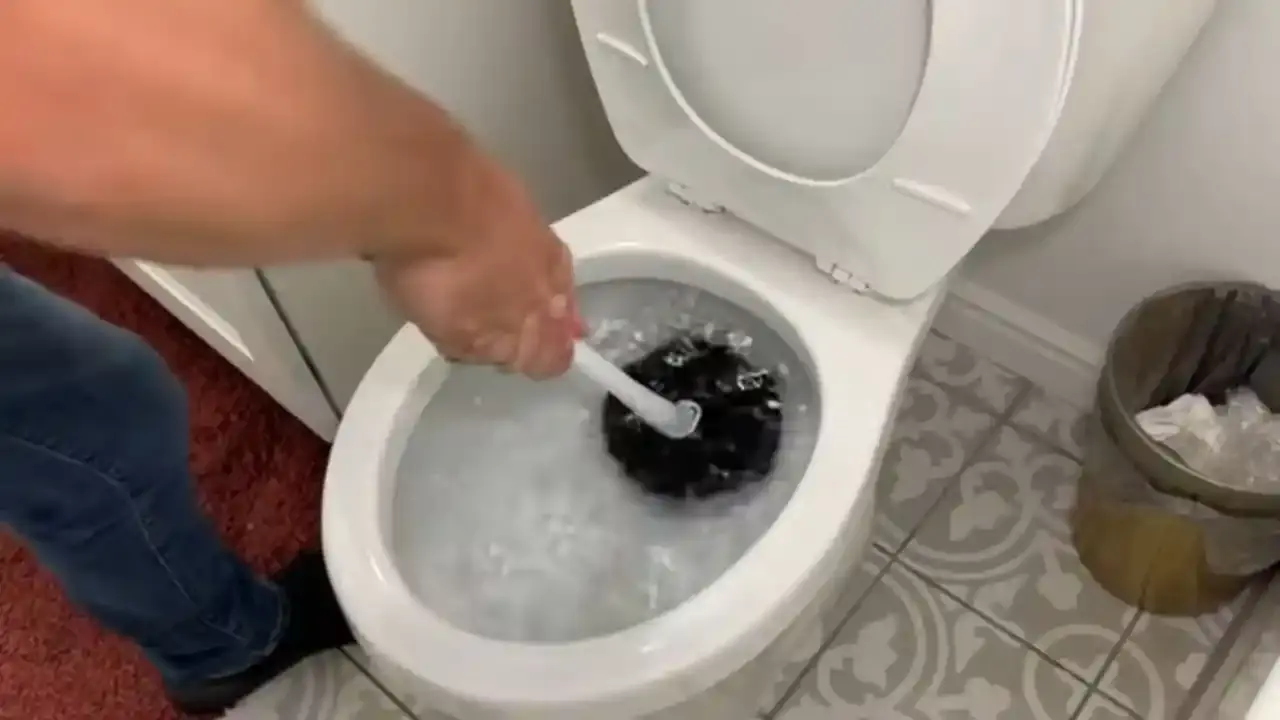
Use a flange plunger, which has a rubber flap that fits into the drain hole, and not the flat cup type made for sinks. Seat it over the opening, push down gently to push out the air, then pull and push firmly ten times without breaking the seal. A clear bowl that drains fast means you are done.
If the bowl rises as you plunge, stop and close the shutoff valve behind the toilet so it cannot overflow. The clog is either too deep or it is somewhere else.
Stop an overflow first
If the bowl is rising
- Lift the tank lid
Push the rubber flapper down so no more water enters the bowl.
- Close the shutoff valve
Turn the oval handle behind the toilet clockwise.
- Protect the floor
Put towels around the base and lay down plastic if you can.
- Do not flush again
A second flush adds more water to a full bowl.
The plunging method that works
Run enough water into the bowl to cover the plunger cup. Warm water helps. Press the plunger gently first to push the air out, then use quick steady strokes. Pull up on the last stroke, because the suction on the way out often breaks the clog.
Try three rounds. If the water level drops and returns to normal, flush once with the lid off, ready to stop the flapper if it rises again.
Use a toilet auger when the plunger fails
A toilet auger is a short snake with a protective sleeve that will not scratch the porcelain. Feed it into the drain, crank clockwise until you feel resistance, then work it through and pull it out. It handles toys, wipes and wads of paper that a plunger cannot move.
| What you see | Likely clog location | What to do |
|---|---|---|
| Only one toilet is slow | In the toilet's own trap | Plunge, then auger |
| Toilet and tub back up together | Branch or main line | Stop using water, call a plumber |
| Gurgling when other drains run | Vent or main line | Call a plumber |
| Floor drain bubbles when you flush | Main sewer line | Call right away |
| Repeated clogs in a newer toilet | Partial blockage or low flush volume | Check the line, consider a camera |
What not to flush
These things cause most repeat clogs
- Wipes of any kind, including those marked flushable
- Paper towels and tissues thicker than toilet paper
- Feminine products and cotton swabs
- Dental floss and hair
- Cat litter, even the kind that says flushable
Plungers compared
| Plunger | Shape | Best for |
|---|---|---|
| Flange plunger | Cup with a soft rubber flap below | Toilets |
| Cup plunger | Flat rubber cup | Sinks, tubs and showers |
| Accordion plunger | Pleated plastic | Not recommended, can scratch and splash |
| Toilet auger | Short snake with a protective sleeve | Clogs a plunger cannot clear |
Using a toilet auger step by step
Clearing a stubborn toilet clog
- Place the auger
Pull the cable back into the sleeve, set the curved end in the bowl and push it into the drain opening.
- Crank clockwise
Turn the handle while you push gently, so the cable winds through the trap.
- Feel the clog
When resistance eases, the cable has broken through or hooked the clog.
- Pull it out slowly
Retract the cable and clean it, then flush once to test.
After a clog clears, watch the next few flushes. A slow swirl or gurgling noise means water is still being restricted further down the line, and the plunger has only opened a small hole.
When a clogged toilet is a sign of something bigger
A single clog is normal. A toilet that clogs once a week, that gurgles when you run a sink or that drains very slowly is giving you a pattern. The usual causes are a partial blockage in the line, a poorly vented drain or a toilet whose flush is too weak to move waste.
Try a few things before you call. Check whether other fixtures are slow, listen for gurgling and look at whether the water level in the bowl is higher or lower than normal. Tell the plumber what you found, because it narrows the search.
Toilets and older Fairborn lines
The City of Fairborn has a Division of Water and Sewer Maintenance for the public sewer. If you and your neighbors are backed up together, that is the division to call, alongside us. If only your house is backed up, the cause is on your side of the connection.
Many Fairborn houses date from the 1950 to 1970 growth years. Cast iron stacks and clay laterals of that age can hold paper and wipes that newer smooth plastic pipe would pass. A toilet that clogs often in an older house is sometimes telling you about the drain, not the toilet.
If the problem keeps coming back, read about drain cleaning and sewer inspection. Crews also serve Beavercreek and Xenia on the same 24/7 line.
Yes, but plunge gently, because the water will splash. If the bowl is about to overflow, close the shutoff valve first.
No. Chemicals can damage the toilet's finish and the wax ring, and they are dangerous if they splash back.
Low flush volume, a partial clog in the trap, or a problem in the line. If an auger does not fix it, ask for a camera check.
It can. Rough pipe walls catch paper and wipes, so avoid anything but toilet paper.
When more than one fixture is affected, when the auger fails, or when water is spreading on the floor.