
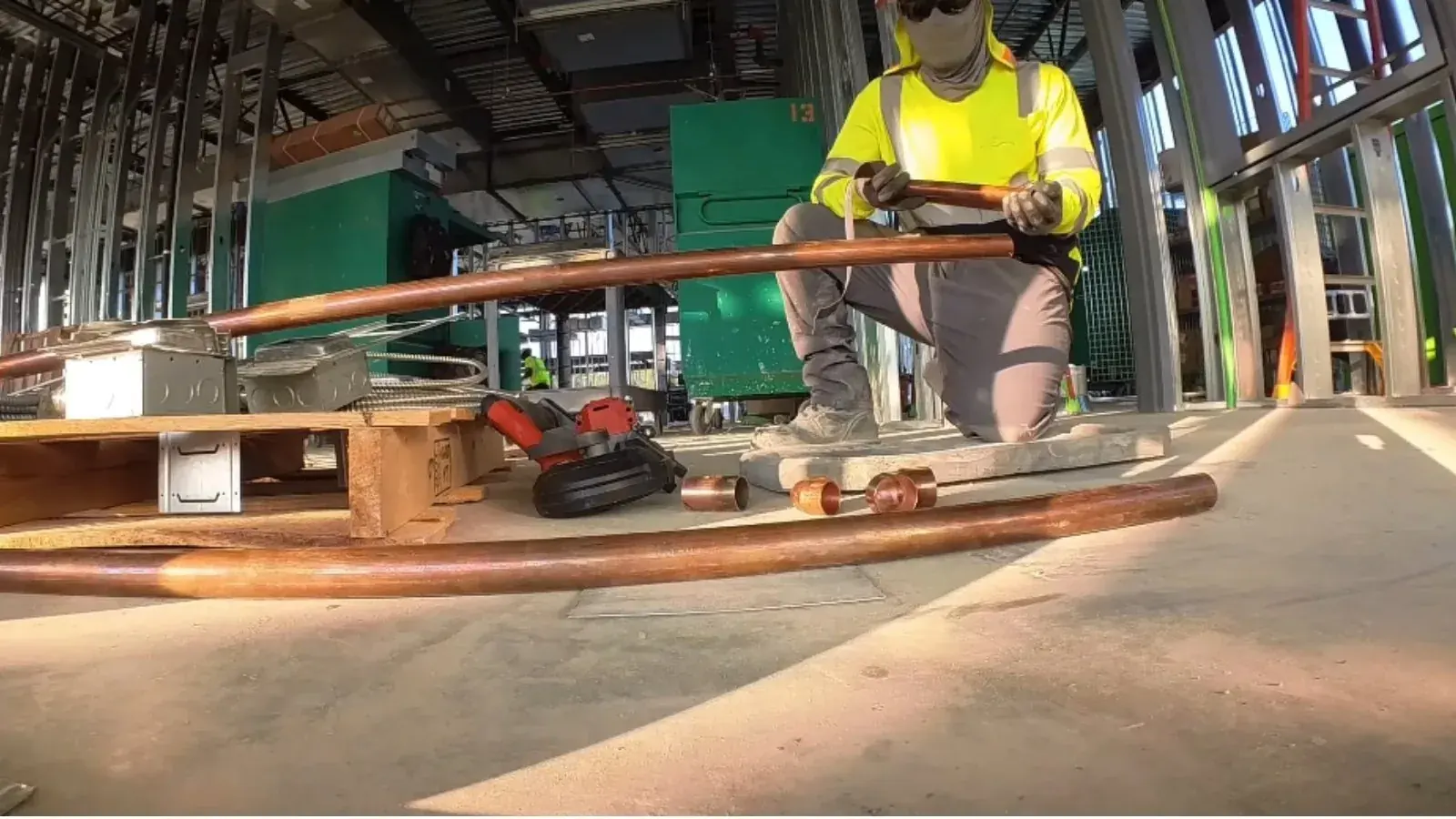
What counts as plumbing installation
New plumbing falls into two stages. Rough-in puts supply lines, drains and vents inside the walls and floors before they are closed up. Finish work sets the fixtures, such as sinks, toilets, tubs and faucets, once the walls and floors are done.
A good plan starts with where each fixture goes, because drains must slope and vent correctly and cannot always be moved.
| Project | What is involved | Planning note |
|---|---|---|
| Basement bathroom | Drain below the slab or an ejector pump, new supply, vent | Slab cutting and drain level decide the plan |
| Kitchen remodel | Move sink, dishwasher, disposal and gas or water to a range or fridge | Check drain and vent capacity |
| Laundry room | Washer box, drain standpipe, hot and cold supply | Add a drain pan upstairs |
| New bathroom | Toilet, sink, shower or tub, vents | Fixture count affects pipe sizing |
| Outdoor spigot or line | Frost-proof hose bib or a new yard line | Freeze protection matters in Ohio |
Basement bathrooms and ejector pumps
If the basement floor is below the sewer line, waste cannot run downhill. An ejector pump in a sealed pit lifts waste up to the main drain. It needs a vent, a check valve and a reliable power supply, and it should be serviced like any other pump.
If the floor is above the line, a cut-in drain under the slab may work. The plumber checks depth before you buy fixtures.
Codes, permits and inspections
Plumbing work follows the Ohio Plumbing Code, and permits and inspections for the county are handled by Greene County Public Health. Rules vary by job, so ask the health district whether your project needs a permit and an inspection.
An unpermitted bathroom can cause trouble at resale. A plumber who works in the county knows the steps and can explain them.
A rough-in checklist before the walls close
Decide these before the plumber starts
- Exact fixture locations, including the toilet, shower and vanity
- Fixture model numbers, since rough-in sizes differ
- Where the water heater, the cleanout and the main shutoff will be
- Whether the walls need blocking to support heavy fixtures
- Which fixtures need hot water, cold water or both
Changing a fixture's position after the walls are finished is one of the most expensive mistakes in a remodel. A quick conversation with the plumber before framing is finished saves a lot of cutting and patching later.
Remodeling in Fairborn
Many Fairborn houses date from the years when the city grew around Wright-Patterson Air Force Base, and they have original drain stacks and supply lines. Tying new fixtures into an old cast iron stack or galvanized line needs a check of what is there first.
If your home is in the Historic Osborn District and was moved in the early 1920s, ask for a drain and supply inspection before the remodel starts. A camera view of the main line is cheap insurance, see sewer inspection.
What changes the price of plumbing installation
New installations are not an insurance claim. Ask about fixture warranties and call for your real number.
Yes. We can rough-in before your contractor closes the walls and return to set fixtures after.
Almost certainly. Ask Greene County Public Health or the city, and the plumber will explain the process.
Sometimes. The drain must slope to the stack and be vented, so distance and floor structure matter.
Yes. Share the model so the plumber can check parts and warranty conditions.
Gas work needs correct sizing and leak testing. Tell the dispatcher what you plan and the plumber will advise.